
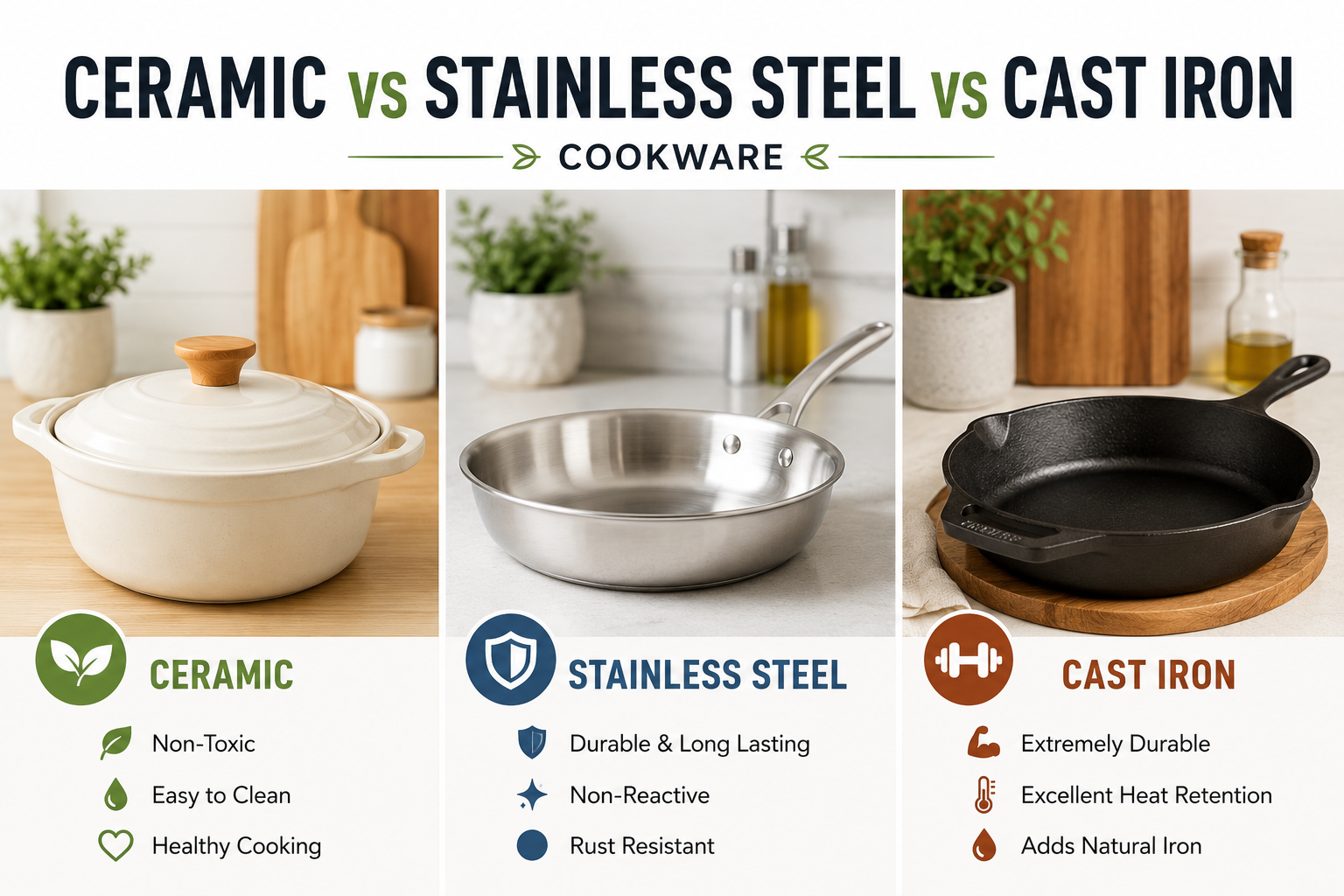
Cookware Materials Compared
Not all cookware materials are created equal. Understanding their strengths and limitations can help you choose the safest, healthiest, and most practical cookware for your kitchen.
Why Cookware Material Matters More Than You Think
When shopping for cookware, many people focus on appearance, price, and brand reputation. However, the material used to manufacture cookware often has the greatest impact on cooking performance, durability, maintenance, and overall safety. As awareness around healthy cookware and best non toxic cookware continues to grow, consumers are paying closer attention to the differences between various cookware materials.
Modern buyers want cookware that not only performs well but also supports a healthier lifestyle. This has led to increased demand for PFAS free cookware, cookware without harmful chemicals, and toxin free cookware options. Understanding the strengths and weaknesses of ceramic, stainless steel, cast iron, and healthy nonstick cookware can help consumers make more informed purchasing decisions and build a kitchen that supports both convenience and wellness.
Choosing the right material is especially important for families that cook regularly. The best cookware for healthy cooking should provide reliable performance while matching your cooking habits and lifestyle needs.
Ceramic Cookware: Stylish, Modern, and Easy to Use
A ceramic cookware set has become one of the most popular choices among homeowners looking for a balance between safety, convenience, and design. Ceramic cookware is often associated with PFAS free cookware and cookware without teflon, making it attractive to health-conscious consumers.
One of the biggest advantages of ceramic cookware is its naturally smooth cooking surface. This allows food to release easily and often requires less oil during cooking. As a result, many consumers consider ceramic cookware a practical option for healthy nonstick cookware. It is also widely recognized as easy to clean cookware, making it suitable for busy households.
Another reason ceramic cookware has become so popular is its visual appeal. Modern ceramic cookware collections are often designed as aesthetic cookware, featuring elegant colors and contemporary finishes that complement today's kitchen interiors. For homeowners searching for a cookware alternative to Caraway, ceramic cookware frequently provides a similar combination of beauty and functionality.
Stainless Steel Cookware: The Professional Choice
Stainless steel remains one of the most trusted cookware materials in both home and professional kitchens. Many chefs consider stainless steel to be among the best cookware brands' preferred materials because of its exceptional durability and versatility.
Unlike coated cookware, stainless steel can tolerate high temperatures without damage. This makes it ideal for searing, browning, and cooking recipes that require precise temperature control. For families seeking cookware for Indian cooking, stainless steel is often an excellent choice because it performs well during extended cooking sessions and high-heat preparation methods.
The debate around ceramic cookware vs stainless steel continues because both materials offer valuable benefits. While ceramic cookware excels in convenience and aesthetics, stainless steel stands out for durability and long-term value. A premium cookware set often includes stainless steel pieces because they can remain functional for decades when properly maintained.
Cast Iron: Traditional Strength with Modern Benefits
Cast iron cookware has been used for generations and remains a favorite among cooking enthusiasts. Its exceptional heat retention makes it ideal for slow cooking, roasting, and achieving deep flavors in a variety of dishes.
For home chefs who enjoy traditional cooking methods, cast iron offers unique advantages. Once properly seasoned, cast iron develops a naturally nonstick surface that improves with use. This makes it an attractive option for individuals looking for cookware without harmful chemicals while maintaining excellent cooking performance.
Although cast iron requires more maintenance than ceramic or stainless steel cookware, many consumers appreciate its longevity and reliability. A well-maintained cast iron pan can last for decades, making it one of the most durable cookware investments available.
Healthy Nonstick Cookware: Convenience Meets Innovation
Modern healthy nonstick cookware has evolved significantly over the years. Today's manufacturers focus on developing cookware with safe coating technologies that provide excellent food release while addressing consumer concerns about traditional coatings.
Many of the safest cookware brands now offer PFAS free cookware options designed to combine convenience with safety. These products appeal to consumers who want the benefits of nonstick cooking without compromising their health goals.
Healthy nonstick cookware is particularly useful for cookware for daily cooking because it simplifies meal preparation and cleanup. Families looking for the safest cookware for family use often choose modern nonstick products because they reduce oil usage and make cooking more accessible for beginners.
As technology continues to improve, healthy nonstick cookware remains one of the fastest-growing segments in the cookware industry.
Which Cookware Material is Best for Your Kitchen?
There is no single answer when it comes to selecting the best cookware material because every household has different needs. A ceramic cookware set is ideal for consumers who prioritize convenience, aesthetics, and easy maintenance. Stainless steel offers unmatched durability and professional-level performance. Cast iron delivers exceptional heat retention and traditional cooking benefits. Healthy nonstick cookware provides convenience and user-friendly cooking experiences.
Many experienced home chefs build a premium healthy cookware collection that includes multiple materials. This allows them to choose the most appropriate cookware for each recipe and cooking technique. Whether you need cookware for gas stove cooking, an induction cookware set, or a complete cookware for modern kitchen setup, combining different cookware materials often provides the greatest flexibility.
Conclusion
Understanding cookware materials is essential for making smart purchasing decisions. Ceramic, stainless steel, cast iron, and healthy nonstick cookware each offer unique advantages that suit different cooking styles and lifestyles. By focusing on best non toxic cookware principles and selecting cookware without harmful chemicals, consumers can create a healthier and more efficient kitchen environment.
The best choice ultimately depends on your personal preferences, cooking habits, and long-term goals. Investing in premium healthy cookware made from trusted materials can improve cooking results, support healthier meal preparation, and provide lasting value for years to come.
Name
PFAS Free Cookware Explained
Meta Title
What is PFAS Free Cookware? Complete Guide
Meta Description
Learn what PFAS free cookware means, why it matters, and how to choose the safest cookware for healthy cooking and everyday use.
Additional Text
PFAS free cookware has become one of the most searched cookware categories in recent years. Discover why consumers are making the switch and how it can benefit your kitchen.
Blog Description
What Does PFAS Free Cookware Actually Mean?
As consumers become more informed about kitchen safety and healthy living, PFAS free cookware has emerged as one of the most popular cookware categories in the market. Many shoppers see the term on product packaging but may not fully understand what it means or why it matters. This growing curiosity has fueled demand for best non toxic cookware, healthy cookware, and cookware without harmful chemicals.
PFAS free cookware refers to cookware manufactured without certain synthetic chemicals that have historically been used in a variety of consumer products. Today's cookware industry is increasingly focused on transparency, safety, and innovation. As a result, many of the safest cookware brands now proudly market their products as PFAS free cookware.
Consumers are becoming more selective about the products they bring into their homes. This shift has made PFAS free cookware a key consideration for families seeking safer and healthier cooking environments.
Why PFAS Free Cookware is Growing in Popularity
The rise of PFAS free cookware is closely connected to broader wellness and lifestyle trends. Modern consumers carefully evaluate food ingredients, household products, and kitchen tools to ensure they align with their health goals. Cookware is no exception.
Many buyers actively seek cookware without teflon and toxin free cookware because they want greater confidence in the products they use every day. The growing demand for healthy cookware reflects a desire to reduce unnecessary exposure to potentially concerning materials while maintaining excellent cooking performance.
This trend is particularly strong among families, health-conscious individuals, and home chefs who spend significant time preparing meals. For these consumers, choosing the best cookware for healthy cooking is an important part of creating a healthier home environment.
How PFAS Free Cookware Supports Healthy Cooking
One reason PFAS free cookware has gained widespread attention is its ability to combine safety with convenience. Consumers no longer need to choose between performance and peace of mind. Modern cookware with safe coating technologies provides excellent cooking results while supporting healthier lifestyle choices.
Many premium healthy cookware collections are specifically designed to meet the expectations of today's informed consumers. Whether selecting a ceramic cookware set, stainless steel cookware, or advanced healthy nonstick cookware, buyers can find options that align with both cooking needs and wellness priorities.
For households focused on cookware for healthy lifestyle goals, PFAS free cookware represents an important step toward building a safer and more modern kitchen.